Online lessons, practical skills signed off by Vlad, and a certificate of completion.
16 modules · 60 lessons · 20 practical skills. Intro, modules 1 to 3, is free and required first.
The mandatory first step, from Vlad. What a poor treatment does to a client's self-esteem and to the industry, why SMP is not easy money or a place to cut corners, what the work really asks of you (long hours, difficult skin, clients carrying trauma) and why it is worth it, and the path to practicing: hygiene and sterilisation training, the permits you need, equipment, a studio, and finding clients.
For anyone exploring SMP as a career, a part-time business, or a service to add to an existing one. Vlad explains the ethical basis of the work: helping people change their relationship with how they look, with their mental health in mind. He shows how he approaches hair loss and what clients ask for, tells the story behind the Rico SMP standard, and gives an honest picture of the economics.
A free introduction for anyone curious about SMP. It explains what scalp micropigmentation is and how it differs from a tattoo, what a realistic result looks like, why it fades over time, and what the published research does and does not show.
The groundwork for every client: a plain-language guide to hair loss: how hair grows, pattern hair loss in men and women, patchy, diffuse and scarring hair loss, hair loss that can recover, and scars from transplants, injury and burns. It shows why the kind of hair loss decides whether SMP is right.
The first professional skill: judging who is safe to treat. It covers stability, referral, skin conditions and allergies, medication and pregnancy, darker skin, and the screening questions to ask every client.
Practical skills: Screening and referral
The hygiene standard behind every session: hands, gloves and single-use items, cleaning and disinfection, setting up the station, sharps and needlestick injuries, and the routine between clients and at the end of the day.
Practical skills: Room set-up and clean-down; Hand hygiene and gloves; Sharps and biomedical waste; Needlestick plan
What the law expects of an SMP artist in Québec and Canada: staying inside cosmetic work, pigments and Health Canada, free and informed consent, minors, client records, privacy under Law 25, and consent for photos.
Practical skills: Photos and photo consent; Records
How to run a consultation that ends with a safe, agreed plan. It covers the first contact, the client's hair-loss story, examining the scalp, the emotional weight of hair loss, honest expectations, when to stop, and how to record the plan.
Practical skills: Health and hair-loss history; Noticing appearance concerns; Honest expectations
The equipment and materials: machines, needles and cartridges, how pigment, colour and dilution affect the healed result, and how to set the machine and needle.
How to design a hairline that looks natural for the client's face and age, plan the crown and the density, avoid design mistakes that are hard to fix, and draw and photograph the plan, practiced on a mannequin head.
Practical skills: Design drawing and approval; Hairline and temples
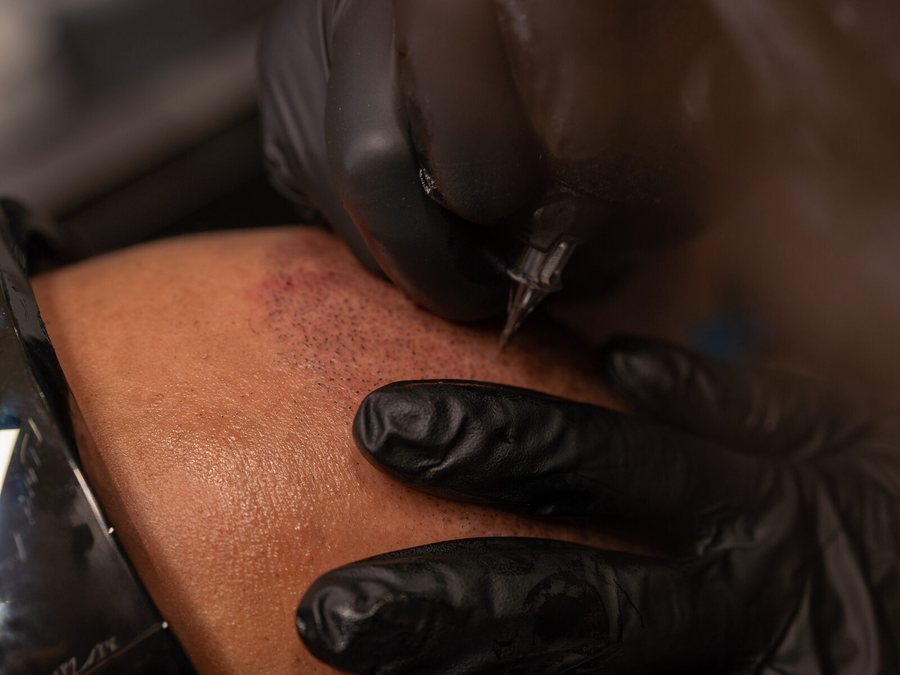
The core skill, practiced on artificial skin and mannequin heads: what a dot must look like, the right depth and angle, placing dots consistently, building density over several sessions, and checking your own work before treating anyone.
Practical skills: Round, small dots; Irregular, even spacing; Depth; Density in layers
A full treatment day the clinic's way, from preparing the room and the health check to consent, approving the design, pacing the session and keeping the client comfortable, and finishing with aftercare and the next booking.
Practical skills: Confidentiality and boundaries; Talking during a session
What happens after a session: what normal healing looks like and why it looks darker at first, the aftercare instructions clients follow, the signs that are not normal, and the touch-up session.
Practical skills: Aftercare with teach-back
How to recognise problems early and respond correctly: infection and skin reactions, blurring, results that are too dark or shift colour, the routes to correction, and how to handle a disappointed client.
Practical skills: Handling a complaint
Treating real clients under Vlad's supervision in the clinic, assessed against a competency checklist for safety, the client, technique and aftercare, until every skill is signed off.
After certification: how to find clients honestly, and the marketing strategies Vlad has seen work, without claims you cannot back up.
A certificate of completion from Rico Clinic Academy, issued when every module is done and Vlad has signed every practical skill. It is not a licence to practice.